Surface science examines physical and chemical interactions at a material's outermost layer, dictating contamination risk and operational lifetime.
What defines a high-purity surface finish?
A high-purity surface finish is a meticulously prepared surface engineered to minimize contamination. The process eliminates microscopic particles, organic residues, and metallic oxides that compromise system integrity.
What contaminants do high-purity finishes remove?
Contamination control targets three primary categories. Microscopic particles shed from manufacturing processes lodge in fluid pathways. Organic residues from lubricants or handling leave films that harbor bacteria. Metallic oxides form when base materials react with oxygen, creating sites for corrosion initiation. Even minute quantities of these contaminants significantly impact the performance and safety of sensitive products and equipment, according to industry documentation on critical surface finishes.
How does surface science govern finish performance?
Surface science examines the physical and chemical interactions at a material's outermost layer. The discipline reveals how roughness, free energy, and passive layer chemistry dictate a surface's behavior in service. A finish with controlled topography resists particle adhesion. A fully passive chromium oxide layer blocks corrosive attack. These principles guide the specification of finishes for ultra-high purity systems, where surface characteristics directly determine contamination risk and operational lifetime.
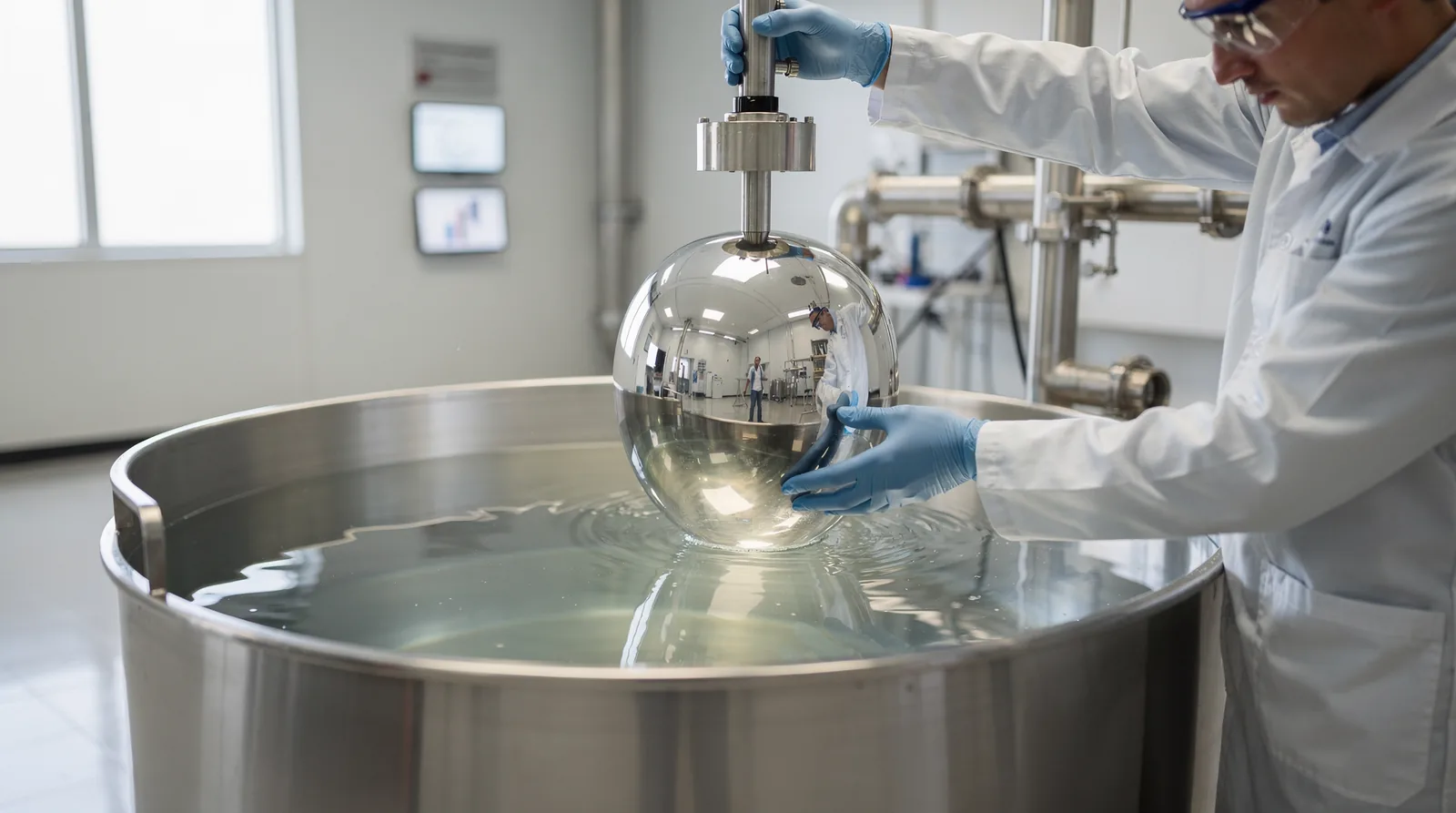
High purity electropolishing applies these scientific principles by removing a thin layer of base metal through controlled electrochemical dissolution. The process preferentially dissolves peaks in the surface profile, reducing total surface area and embedded contaminants. HPT Inc has supplied semiconductor OEMs and end users with tubing and fittings cleaned for ultra-high purity systems. The resulting finish combines sub-microinch roughness with an enriched chromium oxide layer, delivering the cleanliness and corrosion resistance that critical fluid systems demand. Verification of these surface conditions requires rigorous inspection protocols, which form the foundation of a comprehensive quality assurance program.
Why does surface science matter for contamination control?
Surface science determines how a material's outermost atomic layers interact with process fluids, gases, and particulates. A stainless steel component derives its corrosion resistance from a minimum 10.5% chromium content by weight, which forms a passive oxide layer that blocks chemical attack. Without precise control over that layer's chemistry and topography, even high-grade alloys become contamination sources rather than barriers.
How does surface finish influence contamination risk?
Surface finish dictates how easily particles adhere and how completely cleaning processes remove them. Stainless steel surface finishes depend largely on the intended post-fabrication application. A rough, anisotropic surface traps sub-micron debris in valleys that mechanical wiping cannot reach. That trapped material later releases into the process stream, causing defects or batch failures.
What happens when surface science is ignored?
Contamination cascades through critical systems with expensive consequences. In sectors like semiconductor manufacturing, medical device production, and aerospace, contamination control is crucial to maintaining the integrity of high-purity systems. Even minor contamination leads to costly production delays, equipment failures, and compromised safety. A single overlooked surface defect propagates across wafer lots, sterilized implants, or fuel delivery lines before detection triggers a shutdown.
High purity electropolishing addresses these risks at the atomic scale. The process dissolves surface peaks preferentially, reducing total surface area and eliminating the micro-crevices where contaminants lodge. The resulting chromium-enriched surface resists corrosion more effectively than mechanically polished alternatives. Surface science principles guide parameter selection: current density, electrolyte chemistry, and exposure time each alter the oxide layer's stoichiometry and thickness. Contamination control programs that omit surface characterization leave a critical gap. Measuring roughness averages without examining peak counts or skewness misses the features that actually trap particles. Facilities that integrate surface analysis with oxygen cleaning protocols catch contamination vectors before they reach production environments.
How does electropolishing remove surface contaminants?
Electropolishing removes surface contaminants through a controlled electrochemical reaction. The process dissolves a microscopic layer of metal, carrying away embedded particles, oxides, and organic residues. This leaves behind an ultra-clean, smooth surface free of the imperfections that trap contaminants in critical fluid and gas systems.
The treatment functions as a reverse of electroplating. A component is immersed in a chemical bath and connected to a direct current power supply as the anode. Current flow selectively dissolves surface peaks and impurities at the ionic level. The result is a surface with dramatically reduced roughness and no mechanical smearing. Unlike abrasive methods, electropolishing does not fold contaminants into the metal or leave directional scratches that harbor bacteria and process residues.
What types of contaminants does electropolishing eliminate?
The process targets three categories of contamination. First, it removes metallic debris such as burrs, micro-cracks, and free iron left by machining and welding. Second, it strips oxide layers that form during heat treatment or exposure to shop environments. Third, it eliminates organic films, including cutting oils and handling residues. Each contaminant type compromises system purity in different ways. Electropolishing addresses all three in a single, repeatable operation.
Why is surface smoothness critical for contamination control?
Surface roughness creates hiding places for contaminants. Peaks and valleys at the microscopic level trap particles, moisture, and biological matter that later release into the process stream. Electropolishing levels these features, producing a surface that resists particle adhesion and simplifies cleaning. The resulting finish supports rigorous contamination control protocols in semiconductor, biopharmaceutical, and aerospace manufacturing. A smoother surface also improves fluid flow dynamics and reduces the risk of corrosion initiation sites.
High purity electropolishing applies these principles under tightly controlled conditions. The process parameters, bath chemistry, and post-treatment rinsing are engineered to meet the cleanliness specifications of ultra-high-purity systems. Surface science explains the mechanism: reducing surface free energy and eliminating topographical defects minimizes the forces that bind contaminants to the metal. This electrochemical refinement is a core capability of HPT Inc., whose services include electropolishing, oxygen cleaning, mechanical polishing, and passivation. The company's approach to electropolishing delivers the precise surface quality required for contamination-sensitive operations.
What metallurgical changes occur during high purity electropolishing?
High purity electropolishing selectively dissolves a controlled surface layer of metal. This process fundamentally alters the chromium-to-iron (Cr/Fe) ratio at the material's surface. Iron atoms dissolve preferentially during the electrochemical reaction. The result is a surface enriched in chromium, the element responsible for corrosion resistance.
How does the chromium-to-iron ratio change?
The anodic dissolution targets iron atoms more aggressively than chromium. A stainless steel alloy that starts with a bulk Cr/Fe ratio near 0.24 can exhibit a surface ratio exceeding 1.0 after treatment. This enrichment is not a coating. It is a permanent metallurgical modification of the substrate itself.
The chromium-rich layer forms the foundation for a superior passive film. This film is a transparent oxide barrier that spontaneously regenerates in the presence of oxygen. A higher surface chromium concentration creates a denser, more chemically stable passive layer. The enhanced film resists pitting and crevice corrosion in aggressive process environments.
What happens to the surface microstructure?
Electropolishing removes microscopic impurities and levels surface asperities. The process eliminates embedded particles, fragmented grains, and residual stresses left by machining or mechanical polishing. A surface that appears smooth to the naked eye often reveals a smeared, stressed layer under magnification. Electropolishing strips this damaged layer away.
The treatment exposes the undisturbed bulk crystalline structure beneath. This creates a surface free of the micro-crevices where corrosive media accumulate. The resulting topography is smooth on a microscopic scale, which directly reduces the surface area available for contamination adhesion. For contamination control in semiconductor and biopharmaceutical fluid systems, this reduction in real surface area is as critical as the chemical passivity.
Why does passive film stability matter for high-purity systems?
A stable passive film prevents metal ion leaching into process fluids. Unstable films break down locally, releasing iron, nickel, and chromium ions. These ions act as contaminants that compromise product purity in pharmaceutical water systems or create defects in semiconductor wafer fabrication. The chromium-enriched surface produced by high purity electropolishing forms a passive film with fewer defect sites. This film remains intact under thermal cycling and exposure to oxidizing chemistries that would degrade a mechanically polished surface.
The surface science behind this stability involves the film's electronic properties. A chromium-rich oxide behaves as an electrical insulator, blocking the electron transfer required for corrosion reactions. This electrochemical barrier remains effective even when process conditions fluctuate. Facilities like those at HPT Inc's Lake Katrine, NY site, which include ISO Level 5 Class 100 and ISO Level 7 Class 10,000 cleanrooms, ensure that these metallurgical transformations occur in environments that prevent recontamination of the treated surface before packaging.
How do mechanical polishing affect surface topography?
Mechanical polishing directly alters surface science parameters by reducing roughness averages and peak-to-valley measurements. The process removes asperities through controlled abrasive action, transforming a surface's physical profile. Without adequate polishing, irregular topography traps contaminants and initiates corrosion. That loss of surface integrity compromises system performance in semiconductor gas delivery or biopharmaceutical fluid pathways.
What surface roughness changes occur during mechanical polishing?
Polishing progressively reduces Ra (average roughness) and Rmax (maximum peak-to-valley height) values. Abrasive media shear off microscopic peaks, creating a more uniform bearing surface. Stainless steel surface finishes depend largely on the intended post-fabrication application, according to Eagle Tube. The resulting topography directly influences how the material interacts with process fluids and cleaning agents.
How does a smoother surface improve contamination control?
Smoother surfaces strengthen contamination control by eliminating crevices where particles and biofilms accumulate. Standard mill finishes harbor irregularities that resist cleaning validation. Polished topography reduces the surface area available for contaminant adhesion. The finish provides an added layer of protection against oxidation, corrosion, rusting, and staining, Eagle Tube reports. For quality assurance managers, this translates to fewer failed sterility tests and reduced system downtime.
HPT Inc delivers these outcomes through precision mechanical polishing services for both internal diameters (ID) and outer diameters (OD). The company's core finishing services treat stainless steel and high-nickel alloys to controlled roughness specifications. Process engineers specify these finishes to meet ASME BPE or SEMI standards, where topography dictates cleanability. Consistent surface science results from validated procedures rather than trial-and-error grinding. Each polished component exits the process with documented Ra values and a uniform, non-directional finish pattern.
What role does passivation play in surface integrity?
Passivation restores and reinforces the protective chromium oxide layer on stainless steel surfaces. This chemical treatment directly strengthens surface integrity by removing free iron and other contaminants that initiate corrosion. Without this step, even precision-finished components remain vulnerable to degradation.
Surface science principles explain why passivation matters. Stainless steel resists corrosion because chromium reacts with oxygen to form a thin, inert barrier. Fabrication and machining disrupt this layer. Free iron particles embed in the surface. Those particles oxidize rapidly. The resulting rust compromises the entire component. Passivation strips away that free iron. It then promotes uniform reformation of the chromium oxide film. The treated surface becomes chemically passive. It resists pitting, staining, and stress corrosion cracking.
How does passivation differ from electropolishing?
High purity electropolishing removes a microscopic layer of metal to smooth surface peaks. Passivation does not alter dimensions. It cleans at the chemical level. Electropolishing provides a leveled, bright finish. Passivation delivers corrosion resistance. The two processes often work together. A component receives electropolishing first for topography control. Passivation follows to maximize chemical stability.
Why is passivation critical for contamination control?
Contamination control in high-purity systems depends on surfaces that do not shed particles or react with process fluids. A corroding surface releases metal ions and particulate debris. These contaminants degrade product quality in semiconductor, pharmaceutical, and aerospace applications. Passivation locks the surface in an inert state. It prevents the generation of corrosion byproducts. HPT Inc provides passivation services as part of its contamination control solutions. The treatment helps maintain the integrity of high-purity systems across demanding operating conditions.
How is surface finish verified for critical systems?
Surface finish verification confirms that a component meets its specified cleanliness and roughness requirements. Contamination control protocols demand objective, repeatable measurement techniques rather than subjective visual inspection. A failure to detect microscopic defects introduces contamination risks that compromise entire fluid or gas delivery systems.
Surface science principles guide the selection of verification methods. The goal is quantifying surface topography and chemistry at scales relevant to the application. For semiconductor-grade components, this often means detecting features smaller than a few microinches.
What measurement techniques quantify surface roughness?
Contact profilometry drags a diamond stylus across the surface to record peaks and valleys. Non-contact optical methods use light interferometry for faster, non-destructive mapping. Each technique suits different geometries and cleanliness requirements.
How is surface chemistry verified after processing?
Auger electron spectroscopy and X-ray photoelectron spectroscopy identify elemental composition within the top few atomic layers. These tools detect residues from machining or cleaning that visual checks miss. Confirming the absence of organic films and metallic contaminants is essential for oxygen service and ultra-high-purity gas lines.
High purity electropolishing processes produce surfaces that must pass rigorous post-process verification. Quality inspection services verify surface finish compliance with specifications. HPT Inc provides these inspection services for contamination-sensitive industries, including semiconductor manufacturing and aerospace. The company's quality inspection supports stringent cleanliness requirements by confirming that electropolished, passivated, and mechanically polished surfaces meet defined acceptance criteria.
Integrated quality assurance and order tracking streamline fulfillment. Documentation ties each measured value to a specific component and process lot. This traceability gives process engineers and quality managers the objective evidence needed to release parts into critical systems without reservation.
What are the risks of inadequate surface finishing?
Inadequate surface finishing introduces contamination that compromises critical fluid and gas systems. Process engineers and quality managers face direct operational losses when surface defects go unaddressed. Even minor contamination can lead to costly production delays, equipment failures, and compromised safety. These failures cascade into unscheduled downtime and rejected batches that erode throughput and regulatory standing.
How does surface roughness drive contamination risk?
Surface irregularities at the microscopic level trap process fluids, particles, and microbial agents. Standard mechanical finishing leaves peaks and valleys that resist cleaning and foster corrosion initiation sites. Without surface science interventions, these defects become reservoirs for cross-batch contamination.
What operational losses stem from poor finishing?
Production delays represent the most immediate financial impact. A single contamination event forces line shutdowns, root-cause investigations, and requalification cycles. Equipment damage follows when corrosive media attack unprotected stainless steel surfaces. The resulting repair or replacement costs compound the initial lost production time.
Contamination control demands precise surface conditioning to eliminate these failure modes. High purity electropolishing removes the damaged surface layer and creates a chromium-enriched, passive finish that resists corrosion. HPT Inc supports these requirements through electropolishing, oxygen cleaning, mechanical polishing, passivation, and quality inspection services. The company's Lake Katrine, NY facility operates ISO Level 5 Class 100 and ISO Level 7 Class 10,000 cleanrooms. These controlled environments maintain stringent cleanliness specifications and deliver repeatable surface quality for contamination-sensitive applications.
FAQ
What defines a high-purity surface finish?
A high-purity surface finish is a meticulously prepared surface engineered to minimize contamination by eliminating microscopic particles, organic residues, and metallic oxides.
What contaminants do high-purity finishes remove?
High-purity finishes remove microscopic particles, organic residues, and metallic oxides that compromise system integrity and performance.
How does surface science govern finish performance?
Surface science examines physical and chemical interactions at a material's outermost layer, dictating contamination risk and operational lifetime through roughness, free energy, and passive layer chemistry.
Conclusion
Surface finish decisions determine whether a high-purity system operates reliably or fails from contamination. Process engineers and quality managers must specify electropolishing, passivation, and verification protocols that match their application’s cleanliness requirements. Selecting a provider with purpose-built cleanrooms and integrated quality assurance eliminates the risk of surface defects compromising critical fluid and gas systems.